bánh mì men tự nhiên (sourdough) men cái sourdough (starter) Sourdough Starter
bánh mì men tự nhiên (sourdough) men cái sourdough (starter)
bánh mì men tự nhiên (sourdough) men cái sourdough (starter) Khoa học
Vi khuẩn (chủ yếu là vi khuẩn axit lactic, hay còn gọi là LAB) và nấm men hoang dã cùng tồn tại trong bánh mì men tự nhiên (sourdough) men cái sourdough (starter) đến từ môi trường và từ ngũ cốc được sử dụng trong quá trình tạo ra và duy trì nó. Theo thời gian, nhiều chủng khác nhau đến và đi khi một loại tiến hóa vi mô diễn ra trong quá trình bảo trì liên tục của men cái sourdough (starter). Trong quá trình này, các chủng mới được đưa vào từ cả môi trường và bột mì được thêm vào, nhưng chỉ những chủng thích hợp nhất (theo nghĩa tiến hóa) mới tồn tại trong môi trường nuôi cấy. Về bản chất, bạn đang chọn một tập hợp con vi khuẩn và nấm men hoang dã thích nghi và phát triển tốt nhất trong môi trường bạn đã tạo và tiếp tục duy trì.
bánh mì men tự nhiên (sourdough) men cái sourdough (starter) được bảo trì tốt thường bao gồm vi khuẩn axit lactic và nấm men hoang dã với tỷ lệ tương ứng là khoảng 100 trên 1. Vi khuẩn axit lactic trong men cái sourdough (starter) chịu trách nhiệm chính trong việc axit hóa khối bột (dough) thông qua việc sản xuất axit hữu cơ, trong khi các loại nấm men hoang dã chủ yếu chịu trách nhiệm tạo men cho khối bột (dough) thông qua việc sản xuất carbon dioxide.
men cái sourdough (starter) Bảo trì
Bảo trì nhất quán là chìa khóa và sẽ đảm bảo môi trường nuôi cấy của bạn có thể lên men và axit hóa khối bột (dough) của bạn với hiệu quả như nhau mỗi lần. Điều quan trọng là phải giữ những yếu tố thiết yếu này nhất quán nhất có thể với mỗi lần giải khát:
tỷ lệ nước (hydration) (có bao nhiêu nước trong men cái sourdough (starter) của bạn đối với bột mì)
Nhiệt độ của men cái sourdough (starter) của bạn
Tần suất bạn làm mới (hoặc nuôi men (feed)) men cái sourdough (starter), xác định mức độ axit của môi trường nuôi cấy
Loại bột được sử dụng
Thực tế là bánh mì men tự nhiên (sourdough) men cái sourdough (starter) thực sự rất nhiệt tình và kiên cường. Nếu bạn quên làm mới nó trong một ngày, mọi chuyện sẽ ổn thôi. Nếu bạn hết bột mì thông thường, hãy sử dụng loại bột khác mà bạn có trong tủ đựng thức ăn. Ngoài sự thay đổi nhiệt độ lớn (men bắt đầu chịu đựng ở khoảng 120°F/48°C và tôi không muốn vượt quá 85°F/29°C) hoặc quá thờ ơ, rất có thể chỉ cần chú ý và cẩn thận một chút, men cái sourdough (starter) của bạn sẽ phục hồi.
Xem thêm Tạo bánh mì men tự nhiên (sourdough) men cái sourdough (starter) của bạn (trang này) và bánh mì men tự nhiên (sourdough) men cái sourdough (starter) Khắc phục sự cố (trang này).
GIỮ SỨC KHỎE men cái sourdough (starter)
Dưới đây là ba nguyên tắc tôi tuân theo để giữ cho bánh mì men tự nhiên (sourdough) men cái sourdough (starter) của mình luôn khỏe mạnh:
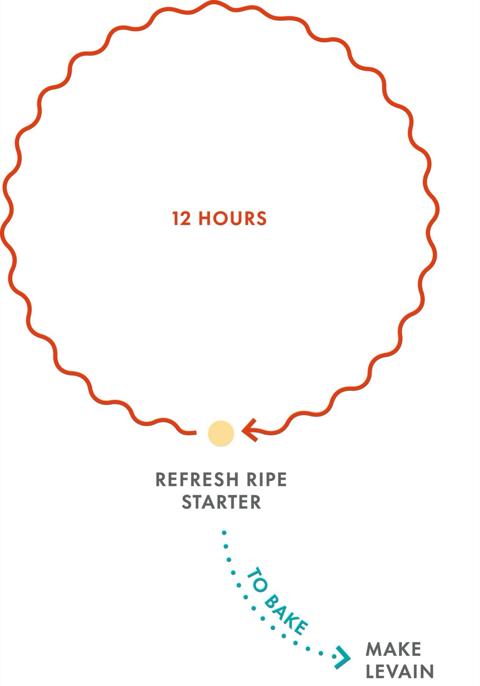
Làm mới nó thường xuyên:Làm mới nó ít nhất một lần một ngày. Tuy nhiên, vì tôi nướng bánh thường xuyên nên tôi thường làm mới men cái sourdough (starter) hai lần một ngày trong khoảng thời gian 12 giờ.
Giữ ấm:Tìm một nơi ấm áp trong nhà bếp của bạn để duy trì hoạt động lên men cao (tôi thích giữ nhiệt độ của tôi ở khoảng 74°F/23°C đến 76°F/24°C). Nếu trong bếp của bạn lạnh, hãy làm ấm nước pha mà bạn dùng để giải khát.
Hãy quan sát:Kiểm tra men cái sourdough (starter) của bạn định kỳ trong ngày để xem nó tiến triển như thế nào. Hãy lưu ý đến vẻ ngoài, mùi thơm và tính nhất quán của nó. Những quan sát này sẽ giúp bạn đánh giá tiến trình lên men của nó trong chu trình giải khát và học cách điều chỉnh khi cần thiết. Theo thời gian, bạn sẽ không cần phải kiểm tra nó thường xuyên nữa, nhưng ban đầu, nó sẽ giúp thiết lập một đường cơ sở quan sát.
levain (levain) ≈ men cái sourdough (starter)
Có một vài điểm khác biệt chính (xem levain (levain) so với men cái sourdough (starter), trang này ), nhưng bánh mì men tự nhiên (sourdough) men cái sourdough (starter) và levain (levain) về cơ bản giống nhau: Cả hai đều được lên men trước, nghĩa là hỗn hợp bột mì và nước được trộn với một ít vi khuẩn đang được nuôi cấy và để lên men. Khi cả men cái sourdough (starter) và levain (levain) đều chín, chúng đều có các dấu hiệu giống nhau (tăng dần, sủi bọt, mùi thơm chua dần) khi chúng chuyển từ “vừa trộn” đến “chín” và cuối cùng là “chín” và mô tả về các giai đoạn của men cái sourdough (starter) có thể áp dụng thay thế cho levain (levain).
bánh mì men tự nhiên (sourdough) men cái sourdough (starter) Vòng đời lên men
Cũng như nhiều bước trong quy trình làm bánh mì, thật khó để đặt ra ranh giới rõ ràng cho các giai đoạn khác nhau của chu trình làm mới bánh mì men tự nhiên (sourdough) men cái sourdough (starter). Mỗi chu kỳ là một quá trình liên tục bắt đầu bằng hỗn hợp bột mì và nước vừa trộn và một chút chất nuôi cấy đang diễn ra của bạn. Từ đó, nó biến đổi khi vi khuẩn và nấm men chuyển hóa đường có trong bột, axit hóa và tạo men cho hỗn hợp men cái sourdough (starter).
Chúng ta hãy nhìn vào các bức ảnh trên trang này về một số đặc điểm của men cái sourdough (starter) ở các giai đoạn khác nhau trong chu trình làm mới của nó. men cái sourdough (starter) được hiển thị bao gồm 70% bột mì trắng và 30% bột lúa mạch đen nguyên hạt với tỷ lệ 100% tỷ lệ nước (hydration), đây là kiểu trang điểm men cái sourdough (starter) điển hình của tôi; xem Cách duy trì men cái sourdough (starter) của bạn, trang này . (Lưu ý rằng men cái sourdough (starter) trong Cách tạo men cái sourdough (starter) của riêng bạn từ đầu, trang này , yêu cầu tỷ lệ bột và nước hơi khác nhau để giúp thúc đẩy quá trình lên men tự phát.)
Sourdough Starter
Sourdough Starter Science
The bacteria (primarily lactic acid bacteria, aka LAB) and wild yeasts that coexist in a sourdough starter come from the environment and from the grain used in both its creation and maintenance. Over time, various strains of each come and go as a sort of microevolution unfolds through the starter’s continued maintenance. During this process, new strains are introduced from both the environment and the added flour, but only the fittest (in an evolutionary sense) remain in the culture. In essence, you’re selecting a subset of bacteria and wild yeasts that best adapt and thrive in the environment you’ve created and continue to maintain.
A well-maintained sourdough starter is typically composed of lactic acid bacteria and wild yeasts in a ratio of about 100 to 1, respectively. The lactic acid bacteria in a starter are primarily responsible for acidifying the dough through the production of organic acids, while the wild yeasts are primarily responsible for the leavening of the dough through the production of carbon dioxide.
Starter Maintenance
Consistent maintenance is key and will ensure your culture can leaven and acidify your dough with the same effectiveness each time. It is important to keep these essential elements as consistent as possible with each refreshment:
The hydration (how much water is in your starter with respect to flour)
The temperature of your starter
How often you refresh (or feed) the starter, which determines how acidic the culture becomes
The type of flour used
The reality is that a sourdough starter is downright hearty and resilient. If you forget to refresh it for a day, it’ll be just fine. If you run out of your usual flour, use another one you have in your pantry. Aside from massive temperature swings (yeasts begin to suffer at around 120°F/48°C, and I don’t like to go above 85°F/29°C) or extreme neglect, it’s likely that with a little attention and care, your starter will recover.
See also Create Your Sourdough Starter (this page) and Sourdough Starter Troubleshooting (this page).
KEEPING A STARTER HEALTHY
Here are three principles I follow to keep my sourdough starter strong and healthy:
Refresh it often: Refresh it at least once a day. However, since I bake so often, I typically refresh my starter twice a day in 12-hour intervals.
Keep it warm: Find a warm spot in your kitchen to keep fermentation activity high (I like to keep mine around 74°F/23°C to 76°F/24°C). If it’s cold in your kitchen, warm the mixing water you use for refreshments.
Be observant: Check in with your starter periodically during the day to see how it’s progressing. Take note of its appearance, aroma, and consistency. These observations will help you gauge its fermentation progress during a refreshment cycle and learn how to adjust as necessary. Over time, you won’t need to check in with it quite so often, but in the beginning, it helps establish an observational baseline.
LEVAIN ≈ STARTER
There are a few key differences (see Levain vs. Starter, this page ), but a sourdough starter and a levain are essentially the same thing: They are both pre-ferments, meaning a mixture of flour and water that’s seeded with a small bit of ongoing culture and left to ferment. As both a starter and a levain ripen they each show the same signs (increased rise, bubbles, a progressively sourer aroma) as they move from “just mixed” through “ripe” and eventually to “overripe,” and the descriptions of the stages for a starter can apply interchangeably to a levain.
Sourdough Starter Fermentation Life Cycle
As with many steps in the breadmaking process, it’s tough to set clear-cut boundaries for the various stages of a sourdough starter’s refreshment cycle. Each cycle is a continuum that begins with a just-mixed concoction of flour and water and a little bit of your ongoing culture. From there, it transforms as the bacteria and yeasts metabolize the sugars present in the flour, acidifying and leavening the starter mixture.
Let’s look at the photographs on this page for some characteristics of a starter at various stages in its refreshment cycle. The starter shown is composed of 70% white flour and 30% whole rye flour at 100% hydration, which is what my typical starter makeup looks like; see How to Maintain Your Starter, this page . (Note that the starter in How to Create Your Own Starter from Scratch, this page , calls for slightly different flour and water ratios to help spur spontaneous fermentation.)